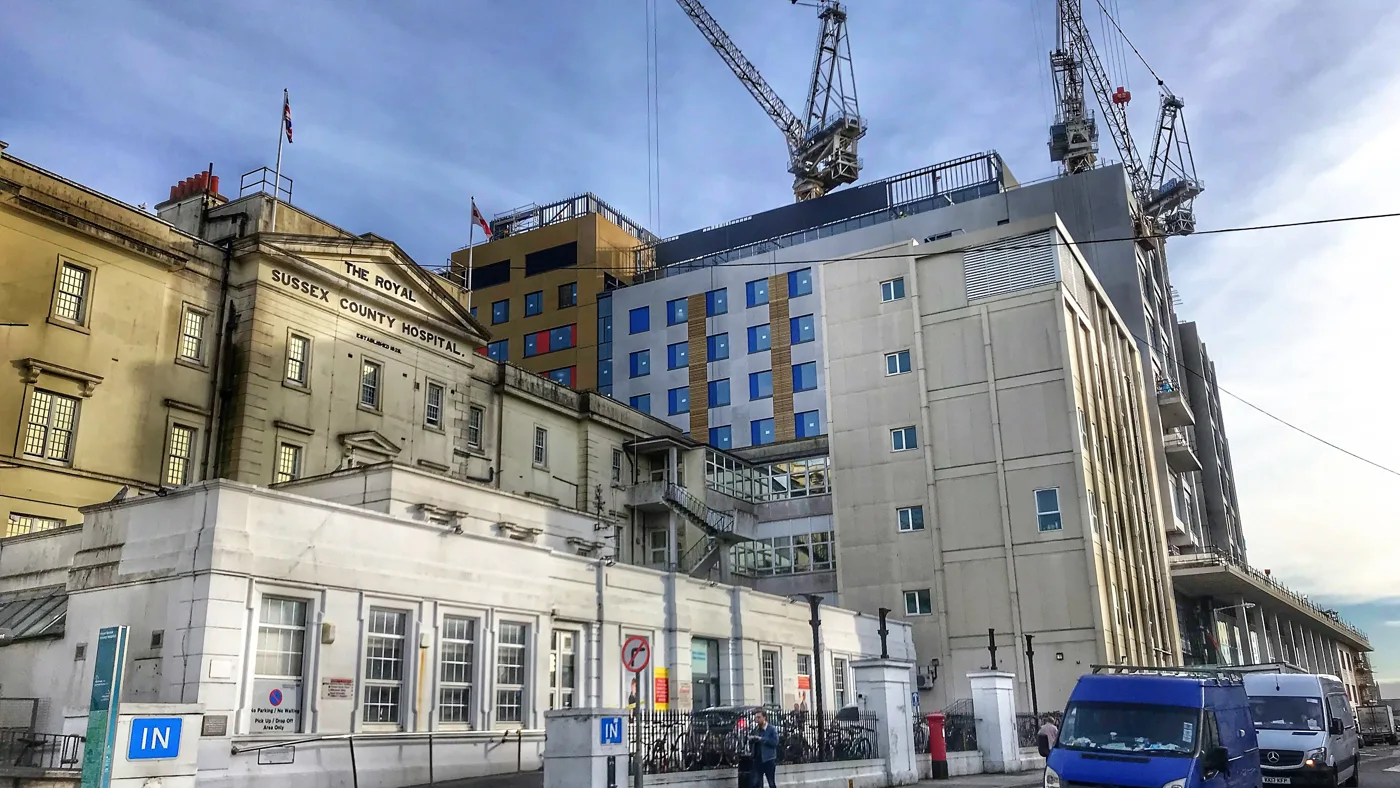

Councillors question Royal Sussex maternity leaders on 18 November. The trust says outcomes beat national rates, but specialist neonatal staffing falls short.
Maternity care at the Royal Sussex County Hospital goes before Brighton & Hove councillors on Wednesday 18 November. The papers for the meeting show a service that the hospital trust says is safe overall, but which still has a specialist staffing gap on its neonatal unit.
The council’s Health Overview and Scrutiny Committee meets at 4pm. Its report covers the national Amos maternity investigation, the coming Ockenden review of the trust, and inspections by the Care Quality Commission (council report, agenda item 14). University Hospitals Sussex NHS Foundation Trust, which runs the hospital, has sent a 22-page briefing (trust briefing, appendix 1).
The staffing figure
The council’s report sums up what the national investigation led by Baroness Amos found at the Royal Sussex. In the 12 months to December 2025, only 48.5% of neonatal nursing shifts there were staffed in line with guidance. The report says that is below the national average and below the trust’s units in Chichester and Worthing.
The trust’s briefing gives its side:
- the 48.5% measures shifts that met the “Qualified in Specialty” standard, nurses with specialist neonatal training
- the Amos report “does not specify the methodology or data source” behind the figure
- funded nurse numbers now meet the British Association of Perinatal Medicine standard
- shift fill rates are “consistently above 90%”
- seven nurses are in specialist training, with another group planned for early 2027
- the specially trained share is expected to reach about 60% by January 2027
The Royal Sussex has the only Level 3 surgical neonatal intensive care unit in Sussex, the trust says. It is one of 14 neonatal intensive care units in England that carry out surgery on babies.
What else Amos found
The Amos investigation looked at 12 trusts and published on 30 June 2026. The council’s report says it found the trust does well on safety measures. Its neonatal death rate was 2.1 per 1,000 live births in 2025, better than the national average.
The same report lists concerns the review team raised about the Royal Sussex:
- the maternity unit “feels cramped”
- running maternity across four distant hospital sites is difficult
- a learning culture “appears not to be fully embedded”
- staff morale is low, and staff are worried about staffing levels
Bereaved families praised community midwives, communication and the kindness of staff. Some also said families were not listened to, services seemed overstretched, and people whose first language is not English had trouble communicating with staff.
The Ockenden review
Donna Ockenden was appointed in April to chair an independent review of maternity and neonatal care at the trust (Department of Health and Social Care, 15 April 2026). It follows years of campaigning by bereaved and harmed families.
The government confirmed the scope in May (Department of Health and Social Care, 13 May 2026). It covers cases from 2018 onwards of:
- stillbirth
- neonatal death
- maternal death
- neonatal harm caused by severe brain injury
- severe maternal harm
The government expects it to examine more than 1,000 cases. Every family who meets the terms is included automatically unless they opt out.
The trust now says preparatory work is under way and the formal terms of reference are “being finalised”. Because of that, the council’s report says the trust will not be able to discuss its plans for the review with councillors.
What the trust says about safety today
The trust’s briefing says it delivers around 9,000 babies a year across Brighton, Haywards Heath, Worthing and Chichester. It gives these figures:
- perinatal mortality (stillbirths and neonatal deaths together) of 2.64 per 1,000 births, against a national rate of 4.77
- stillbirths below the national benchmark
- suspected brain injury in babies at the national average
- midwifery vacancies down from 22% in 2022 to “near-full establishment”
It also says: “Some women, birthing people, babies and families have experienced care or outcomes that fell below the standards they should expect. We are deeply sorry when this happens.”
The briefing adds that the scrutiny has an effect on families. It says some expectant parents are more anxious, more are asking for caesarean births, and some are choosing care outside their local service.
How the hospital got here
The Care Quality Commission rated maternity at the Royal Sussex Inadequate in December 2021, the council’s report says. The trust then joined NHS England’s Maternity Safety Support Programme. The latest inspection, published in December 2025, raised the rating to Requires Improvement.
The trust says most actions from that inspection are complete. Work still under way includes finishing its policies, 77% of which are now live. It also says wider constraints within Sussex House, one of its buildings at the hospital, “require a longer-term plan”.
What it means for you
If you are pregnant, keep going to your appointments. The government said when it set the review’s scope that “the vast majority of births in the NHS have good outcomes”. It asked women to raise any concerns with their midwife or care team.
You can watch the meeting. The committee meets at 4pm on Wednesday 18 November (meeting page). The report is for councillors to note, so no decision will be taken.
If your family may be covered by the review, the government says you do not need to apply. Families who meet the terms will be included automatically.
Have your say