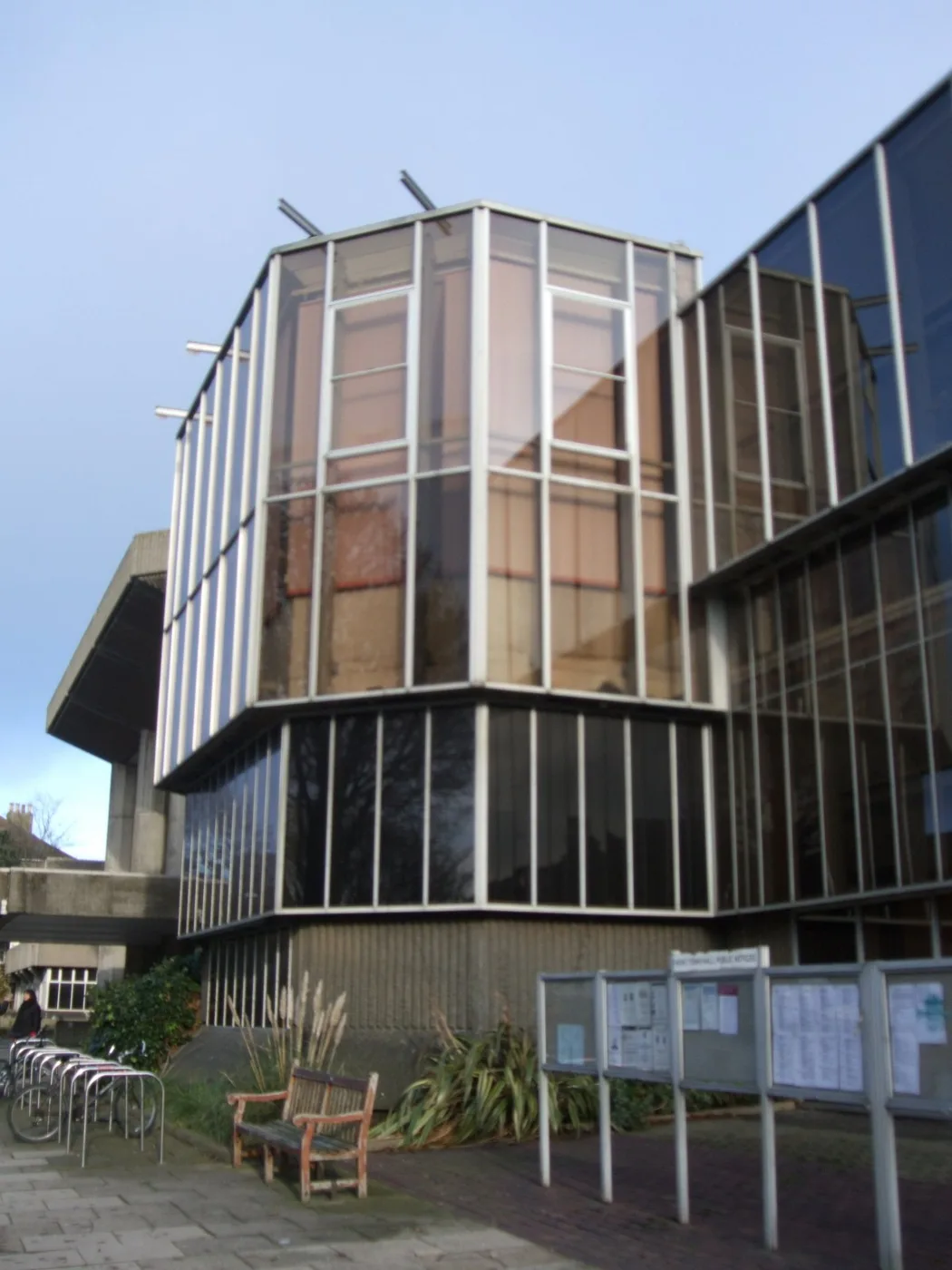

Search the Brighton planning register free, no account. The 21-day comment window, the map search trick, and why five objections stop working on 31 October.
Every one of the Brighton planning applications submitted in the city, from a loft conversion in Portslade to a seafront leisure centre, lands on one public record, the council’s Brighton planning register, which anyone can search for free without an account. Most people only discover a scheme when the scaffolding goes up next door, by which time the window to say anything has closed. This is a plain guide to where the register is, how to read an application reference, how long you get, what the council will and will not take into account, how to follow a case into appeal or enforcement once the application stage is over, and which of the city’s big schemes are moving right now.
The Brighton planning register: where it is and how to search it
The council’s Planning Register is the single online record of applications received and decided in Brighton & Hove. It runs on Idox Public Access, and you can search it here:
You do not need to log in to look. Type a street, a postcode or a reference and you get the drawings, the officer reports, the consultation dates and any comments already submitted. The council also runs the same system on the address planningapps.brighton-hove.gov.uk, which its own newsroom links to; both point at the same register.
One gap worth knowing about: applications made under the Permission in Principle legislation are not on the register at all. The council publishes those individually on a separate page, with their own comment deadlines, and warns that because the timescales are short it cannot consider comments received after the date on the site notice.
Five ways into the register, and when to use each
The register is not one search box, and picking the wrong one is why people conclude an application “is not on there”. The council lists what the system can do (find and comment on planning applications):
- Simple search by address, postcode or reference. Right for “what is happening at number 42”, wrong for a street where the application was registered against a neighbouring plot.
- Map search, which plots applications on a map of the area. This is the one to use when you know roughly where the site is but not its official address, which is common for back-land plots, garage blocks and seafront sites.
- Search by application type, so you can pull out every “change of use” in the city rather than every application on one road. Useful if you are watching a trend, such as houses turning into HMOs.
- Search by agent, which lists the applications submitted by a particular planning agent. Developers use the same agents repeatedly, so this is how you find the rest of a portfolio.
- The weekly list, a browsable run of what has just been registered, published separately from the register itself at weekly list of planning applications.
The register carries current applications and historic decided ones, so it also answers the other common question: what was allowed here before, and on what conditions. If you are checking a property before buying, the decision notices and conditions on past applications sit on the same record as the drawings.
Two things it will not do. It does not include Permission in Principle applications, as above. And it is a record rather than a notification service: nothing arrives in your inbox unless you set up an account and save a search.
Reading a Brighton planning reference
A Brighton reference looks like BH2026/00490. BH is the authority, the four digits are the year the application was registered, and the last five are the running number for that year. If you only know the address, the simple search will find it.
What the register gives you free, and what Brighton charges for
Everything on the register is free to read, including the drawings, the officer report and the decision notice, and you do not need an account to do it. The charges start where the register stops, and the council publishes a schedule (list of charges for planning information):
| What you want | Charge |
|---|---|
| A planning decision from 1997 onwards | Free on the register; £18.50 if you want a printed copy |
| A planning decision from before 1997 | £49.00 |
| Planning history research on an address | £37.00 per address |
| Copies of plans for major and other applications | £37.00 per address |
| A copy of an enforcement notice or an Article 4 Direction | £18.50 each |
| Photocopying | £5.00 minimum, then 32p an A4 sheet, 53p A3, £5.50 A2, £11.00 A1, £21.00 A0 and above |
The line that matters is the 1997 one. The register is very good on the modern record and thin behind it, so a Victorian or interwar property with a long history of alterations can have most of its file sitting on the paid side of that date. If you are checking what was permitted at a house before buying it, budget for the £49 rather than assuming the free search is the whole story.
Worth knowing before you pay: these charges are the ones on the council’s own schedule, which its page records as last updated on 1 April 2019, so confirm the current figure with the planning team before sending money.
Setting up alerts
If you care about one street rather than one application, register a free account on the Planning Register, run the search you want, then save it and switch on notifications. The council notes that this account is separate from MyAccount, although you can use the same email and password. Saved searches are the difference between hearing about a neighbour’s plans on day one and hearing about them after the consultation has closed. If you would rather browse, the council also publishes a weekly list of planning applications.
How long you get to comment
The standard consultation period in England is 21 days from the point the consultation opens, and the exact deadline for each application is shown on its page on the register, in the neighbour letter, or on the site notice fixed near the site (Planning Aid guidance on commenting). Check the application’s own page rather than counting days yourself.
Two Brighton-specific things affect timing. First, the council currently warns of a 2 to 3 working day delay before it starts validating new applications, expected to lengthen over the summer holidays, so a scheme you have heard about may not appear on the register immediately. Second, to protect that work the planning team says it will only respond to progress queries on applications received at least 7 working days earlier (planning service notices).
How to comment, and what actually counts
You can comment online through the register, or, if you cannot access it, by email or post (find and comment on planning applications):
- online through the Planning Register
- by email to planning.applications@brighton-hove.gov.uk
- by post to the Planning and Building Control Service, 1st Floor, Hove Town Hall, Hove, BN3 3BQ
The council is blunt about one requirement: you must include your full name and postal address, so it can contact you if the applicant appeals. It states that “comments submitted without this information will not be recorded on the register for the case officer to review”. It also says it does not reply to comments, and that when an application draws a large number of them there may be a delay before they appear online, though all of them will reach the case officer before the report is written.
The harder point is what a comment can be about. A planning decision turns on material planning considerations: overlooking and loss of light, highway safety and parking, design and the character of the area, noise, trees and open space, drainage and flooding, heritage impact in a city with more than thirty conservation areas, and conflict with the council’s own policies. It does not turn on the loss of a private view, the effect on your house price, competition with an existing business, or who the applicant is. Objections written in planning language carry weight; the same point written as a complaint often does not.
Who decides, and when councillors get involved
About 96% of applications are decided by officers under delegated powers, without any councillor vote. That covers alterations, small extensions, conversions, straightforward changes of use and housing schemes of up to nine units (how a planning decision is made).
An application goes to the Planning Committee when it meets one of the council’s published triggers:
- it is for 10 or more units of housing
- there are 5 or more individual letters of objection and officers are recommending approval
- there are 5 or more individual letters of support and officers are recommending refusal
- the ward councillor, the Conservation Advisory Group or the Disabled Access Advisory Group disagrees with the officer recommendation and asks the committee to decide
What it means for you: five objection letters is a low bar, and it is the single most useful thing to know if you want a scheme debated in public rather than signed off at a desk. Five separate, individually written objections do more than fifty copies of the same template.
Those triggers are Brighton’s own, and they have a shelf life: a national scheme of delegation takes effect on 31 October 2026 and rules out both objection-count triggers and ward councillor call-in. See what changes on 31 October 2026 below.
The committee has 10 voting members drawn from all parties on the council, plus one co-opted non-voting member representing the Conservation Advisory Group. It meets monthly at 2pm in the council chamber at Hove Town Hall, publishes its agenda seven days beforehand, and is webcast on the council’s YouTube channel. Arrangements to speak, or to have a statement read out, must be made in advance through democratic.services@brighton-hove.gov.uk (planning committee).
One local quirk: part of the city sits inside the South Downs National Park, and there the South Downs National Park Authority, not the city council, is the planning authority. Occasionally, large or nationally significant proposals are also called in by the Secretary of State instead of being decided locally.
Appeals and enforcement on the Brighton planning register
The Brighton planning register is three records in one search box, not one. The council’s own search covers planning applications, appeals and enforcement cases, so if a scheme you were watching disappeared from the applications list, it has usually moved into one of the other two rather than gone away.
Appeals. Only the applicant can appeal, and the appeal itself is decided by the Planning Inspectorate, which is independent of the council. The council’s appeals page points you at the Inspectorate’s database, and there are two live services: the appeals casework portal and the newer appeal a planning decision service. If a case is missing from one, search the other, because they do not hold identical sets.
The deadlines are national, not Brighton’s, and they differ sharply by application type:
| Situation | Deadline to appeal |
|---|---|
| Householder application refused (extension, conservatory, loft conversion) | 12 weeks from the date on the decision letter |
| Any other application refused, or granted with conditions you object to | 6 months from the date on the decision letter |
| No decision at all (standard application) | Appealable once 8 weeks have passed; 6 months from the date the decision was due |
| No decision at all (major scheme, 10+ homes or over 1,000 sq m) | Appealable once 13 weeks have passed |
| Enforcement notice received before the refusal | 28 days from the date on the decision letter |
| Enforcement notice received after the refusal | 28 days from the notice, or 6 months from the decision letter, whichever is sooner |
| Challenging the Inspectorate's own decision in the High Court | 6 weeks from the day after the decision |
Two points a neighbour needs. There is no fee to appeal, so a refusal is rarely the end of a scheme. And if you commented on the original application, the council must tell you within 5 working days that an appeal has been made and whether you can comment on it; where you can, you have 5 weeks from the appeal start date, which is shorter than the 21 days you had first time round. If you object to something in Brighton, keep the reference, because the second round moves faster than the first.
Enforcement. Breaches of planning control are dealt with separately, and the council keeps an enforcement register listing the notices it has served, in date order rather than by address, so use your browser’s find function on the document to check a particular property (planning enforcement). This is the record to check before buying: an outstanding enforcement notice runs with the land, not with the person who built the thing.
What changes on the Brighton planning register on 31 October 2026
Two of the routes described above stop working this autumn, and the change is national rather than a Brighton decision.
The Town and Country Planning (Discharge of Local Planning Authority Functions) (England) Regulations 2026, SI 2026 No. 854, were made on 15 July 2026 under sections 319ZZC to 319ZZE of the Town and Country Planning Act 1990 and come into force on 31 October 2026. They impose a national scheme of delegation on every English planning authority, Brighton & Hove included.
- Regulation 4 and Schedule 1 say the council must let an officer decide fifteen categories of application, including householder work, minor commercial schemes, minor residential of 1 to 9 dwellings on a site under 0.5 hectares, condition discharges, non-material amendments, prior approvals, permission in principle and certificates of lawfulness. There is no route to committee for any of them.
- Schedule 2 covers everything else and is presumed delegated too. Sending one to committee needs a regulation 5(3) criterion and the agreement of both the council’s nominated officer and its nominated member. If those two disagree, officers decide.
- Regulation 7 caps a planning committee at 13 members. Brighton’s committee of ten voting members plus one co-opted non-voting member is already inside that.
The statutory guidance published on 1 June 2026, Planning Committees and the National Scheme of Delegation, names two long-standing local practices as incompatible: ward councillor call-in and triggers based on the number of objections. Councils are told to amend their constitutions, and warned that decisions taken under the old triggers are liable to judicial review.
What it means for you. Read the “five objection letters” trigger above as advice with a deadline on it. Until 31 October it is still the cheapest way to force a public debate on a Brighton scheme. After that date the number of objections will not, on its own, move an application from an officer’s desk to the committee chamber, and neither will asking your ward councillor. The comments themselves still count, because officers must take material planning considerations into account either way, but the escalation route closes. If you have a scheme you want debated in public, the calendar matters as much as the argument.
A second 2026 change runs the other way. Under the Town and Country Planning (Consultation) (England) Direction 2026, made on 31 March 2026, any application of 150 or more homes that was not determined before 11 May 2026 cannot simply be refused: where the authority is minded to refuse, it must consult the Secretary of State first and then wait at least 21 days. For the largest Brighton schemes, refusal is no longer a decision the city takes on its own.
Schemes moving through the system now
The council keeps a public list of its major developments, which is the fastest way to see what is coming. Among them are Brighton Gasworks, Toads Hole Valley, Patcham Court Farm, the Brighton Hippodrome, Madeira Terrace, Preston Barracks, Black Rock, Benfield Valley and Hove Station Area, each with its own page and history.
The most recent to reach a decision is the King Alfred. On 29 July 2026 the Planning Committee voted 8 to 1, in line with the officer recommendation, to be minded to grant permission for a new leisure centre on part of the existing Hove Street South site, subject to referral to the Secretary of State, who then has 21 days from confirmed receipt to decide whether to call it in. The scheme includes an eight-lane main pool, a 17 metre teaching pool with a movable floor, a six-court sports hall and a 122-space underground car park, and the existing centre stays open while it is built. The application is BH2026/00490 on the register, and the committee papers and full webcast are published (plans for King Alfred move forward).
It is a useful worked example of the process on this page: an officer recommendation, a long public debate, a recorded councillor vote, and a further national step before anything is built.
Frequently asked questions
How do I find planning applications in Brighton?
Search the council’s Planning Register at publicaccess.brighton-hove.gov.uk/online-applications by address, postcode or reference. No account is needed to view. The council also publishes a weekly list of applications.
What is the Brighton planning portal?
It is the council’s online Planning Register, an Idox Public Access system. Some pages link to it as publicaccess.brighton-hove.gov.uk and others as planningapps.brighton-hove.gov.uk; they are the same register. Applications made under the Permission in Principle legislation are not included and are published separately.
How do I search the Brighton planning register if I do not know the address?
Use the map search rather than the address box. The register plots applications on a map of the area, which is how you find back-land plots, garage sites and anything registered against a neighbouring address. You can also search by application type, for example every change of use, or by the agent who submitted it.
How long do I have to comment on a Brighton planning application?
Normally 21 days from the start of the consultation. The exact deadline is shown on the application’s page on the register and on the neighbour letter or site notice, so check there rather than assuming.
How do I object to a planning application in Brighton?
Comment through the register, email planning.applications@brighton-hove.gov.uk or write to the Planning and Building Control Service, 1st Floor, Hove Town Hall, Hove, BN3 3BQ. You must give your full name and postal address, or the comment will not be recorded. Base your points on planning matters such as overlooking, highway safety, design or heritage.
When does a Brighton planning application go to committee?
When it is for 10 or more homes, when there are 5 or more objections and officers recommend approval, when there are 5 or more letters of support and officers recommend refusal, or when a ward councillor, the Conservation Advisory Group or the Disabled Access Advisory Group asks the committee to decide. Roughly 96% of applications never get there.
Is the five objections rule changing?
Yes. From 31 October 2026 the national scheme of delegation in SI 2026/854 takes effect, and the statutory guidance rules out both objection-count triggers and ward councillor call-in. Until then, five individually written objections against an officer recommendation to approve still send a Brighton application to committee. After then they will not, although the objections themselves must still be taken into account by the officer deciding.
Is the Brighton planning register free to use?
Yes, to read. The drawings, officer reports, consultation dates and decision notices are all free and need no account. Charges apply only where the register runs out: £49 for a decision issued before 1997, £18.50 for a printed copy of a post-1997 one, and £37 per address for the council to research an address’s planning history for you.
Does the Brighton planning register show appeals and enforcement notices?
Yes. The council’s register search covers planning applications, appeals and enforcement cases, so a scheme that has vanished from the applications list has usually moved rather than gone. Appeals themselves are decided by the Planning Inspectorate and are searchable on its appeals casework portal. Enforcement notices are listed in a separate register kept in date order, so search it for the address.
How long do I have to appeal a Brighton planning refusal?
Twelve weeks from the date on the decision letter for a householder application such as an extension, conservatory or loft conversion, and six months for anything else, including an appeal against conditions. If an enforcement notice is involved the window drops to 28 days. There is no fee to appeal.
Can I comment on a Brighton planning appeal?
Only if you commented on the original application. The council must then tell you within five working days that an appeal has been made and whether comments are open, and where they are you have five weeks from the appeal start date, which is shorter than the 21 days you had on the application.
Who decides planning applications in Brighton?
Planning officers decide about 96% under delegated powers. The rest go to the Planning Committee, which has 10 voting councillors and one co-opted non-voting member, and meets monthly at Hove Town Hall. Within the South Downs National Park, the National Park Authority decides instead.
Sources
-
Brighton & Hove City Council, list of charges for planning information, for the £49 pre-1997 decision fee and the £37 history search, checked 31 August 2026
-
Brighton & Hove City Council, find and comment on planning applications and the Planning Register
- Brighton & Hove City Council, find and comment on Permission in Principle applications
- Brighton & Hove City Council, how a planning decision is made
- Brighton & Hove City Council, planning committee and the weekly list of planning applications
- Brighton & Hove City Council, planning service notices and major developments
- Brighton & Hove City Council, plans for King Alfred move forward
- legislation.gov.uk, The Town and Country Planning (Discharge of Local Planning Authority Functions) (England) Regulations 2026 (SI 2026 No. 854, in force 31 October 2026)
- GOV.UK, The Town and Country Planning (Consultation) (England) Direction 2026
- Brighton & Hove City Council, planning appeals and planning enforcement
- GOV.UK, appeal a householder planning decision: deadlines (12 weeks) and appeal a planning decision: deadlines (6 months, 28 days where an enforcement notice is involved), checked 7 September 2026
- GOV.UK, comment on a planning appeal, for the 5 working day notification and the 5 week comment window
- Planning Aid, how to comment on a planning application
Elsewhere on this site: Brighton planning news and the new City Plan, Brighton bin collection days, parking in Brighton and Brighton council tax bands.
Checked against the council’s planning pages on 4 August 2026, and the appeal and enforcement section added on 7 September 2026. Comment deadlines and application statuses change daily, so confirm on the Planning Register before relying on a date.
Have your say