
A two-mile Brighton taxi ride goes from £8.70 to £9.30 under a Cabinet report on 17 September. Future rises would be signed off by an officer, not councillors.
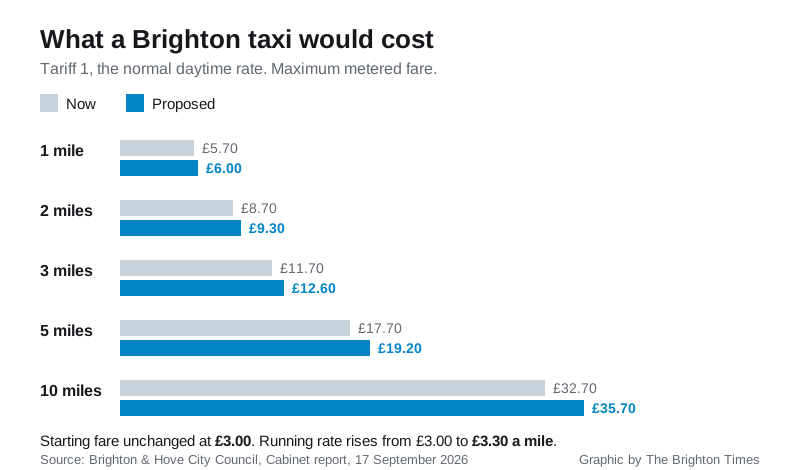
A two-mile daytime taxi ride in Brighton would cost £9.30 instead of £8.70 under proposals going to the council’s Cabinet on Thursday 17 September. The £3 starting fare stays as it is. The increase comes from the meter ticking over more often (Cabinet agenda item 51, 17 September 2026).
It would be the first rise since March 2024. The trade asked for it, and the council’s report recommends it.
The same meeting decides on the city’s park rules and £100 fines and a £41m bid to rebuild the seafront arches.
There is a second decision buried in the same report, and it matters more than the 60p. Cabinet is being asked to hand the power to set taxi fares to a senior officer, for this review “and all future taxi fare reviews” (Hackney Carriage Fare Review, paragraph 2.3).
What each journey would cost
These are maximum metered fares on Tariff 1, the normal daytime rate. Current fares first, proposed second.
| Distance | Now | Proposed | Change |
|---|---|---|---|
| Starting fare | £3.00 | £3.00 | no change |
| 1 mile | £5.70 | £6.00 | +5.3% |
| 2 miles | £8.70 | £9.30 | +6.9% |
| 3 miles | £11.70 | £12.60 | +7.7% |
| 5 miles | £17.70 | £19.20 | +8.5% |
| 10 miles | £32.70 | £35.70 | +9.2% |
Source: Proposed and Existing Tariffs Comparison, Tariffs 1 to 5. The council’s report puts the average increase at about 7.4%.
Why the meter, not the flag, is doing the work
The trade specifically asked not to raise the starting fare. It asked instead to shorten the distance you travel for each 30p.
- Now: 30p for every 176 yards, or every 54 seconds of waiting
- Proposed: 30p for every 160 yards, or every 36 seconds of waiting
That works out at £3.30 a mile instead of £3.00. The waiting rate goes from £20 an hour to £30 an hour, which the report says is meant to help drivers reach the national living wage of £13.45.
The effect is that short trips barely move and long ones move most. The report says this keeps “short journeys more affordable for vulnerable customers”.
Where Brighton sits against everywhere else
The council benchmarked the two-mile Tariff 1 fare against 17 comparable authorities plus the Sussex neighbours. Brighton and Hove currently ranks 38th nationally. At £9.30 it would be joint 15th, level with Edinburgh and Glasgow.
| Authority | 2-mile fare | Last rise |
|---|---|---|
| Eastbourne | £9.60 | 2026 |
| Arun | £9.50 | 2026 |
| Brighton & Hove (proposed) | £9.30 | 2026 |
| Lewes | £9.20 | 2026 |
| Worthing | £9.10 | 2025 |
| Mid Sussex | £9.00 | 2024 |
| Brighton & Hove (current) | £8.70 | 2024 |
| Southampton | £8.40 | 2023 |
| Portsmouth | £7.40 | 2023 |
Source: Benchmarking data and comparative rankings.
The council is honest about what those rankings are worth. It notes that 60p on a two-mile fare moves the city about 23 places, because the national table is tightly bunched, and that rankings should be treated “as a benchmarking tool rather than an indication of materially different fare levels”.
The night rate stays cheap by comparison
Brighton has five daytime and night tariffs, plus five more for vehicles carrying five to eight passengers, charged at 1.5 times the rate. None of the starting fares change:
- Tariff 1, normal daytime: £3.00 to start
- Tariff 2, 9pm to midnight, and all day Sunday and bank holidays: £4.00
- Tariff 3, midnight to 6am: £5.00
- Tariff 4, 9pm on 24 December to 6am on 27 December, and 6am to 10am on New Year’s Day: £4.50, then 45p a unit
- Tariff 5, 9pm on 31 December to 6am on 1 January: £6.00, then 60p a unit
The report points out that many councils set a night tariff at up to 1.5 times the daytime rate, while Brighton adds only to the starting fare. Under the proposal, a two-mile trip after midnight would be £11.30, against £9.30 in the day.
Who actually decides
Recommendation 2.3 is the one to watch. It asks Cabinet to delegate to the Corporate Director for City Operations, in consultation with the Cabinet Member for Culture, Heritage and Tourism, the power to “determine and implement all future revised taxi fare tables”, unless Cabinet later changes its mind.
If that is agreed, the next fare rise, and the one after, would not come back to a public Cabinet meeting.
There is a reason fares are at Cabinet at all this time. Trade representatives, the chair of the licensing committee and council officers agreed a proposal on 28 May 2026 and intended to send it to the Licensing Committee. Legal advice then confirmed that setting fares is an executive function, so it had to go to Cabinet instead.
What it means for you
Nothing changes on the meter yet, and there are two chances to say something before it does.
- The council is running a four-week engagement on the Equality Impact Assessment. It closes before any decision on the fares themselves is taken.
- A statutory notice must then be published in a local newspaper, setting out the proposed table of fares and giving at least 14 days for objections. If nobody objects, the new fares simply start at the end of that period.
- If objections are made and not withdrawn, the council has to consider them before deciding, and the new fares must start no later than two months after the date first advertised.
Objections can be about the level of the fares, affordability, the viability of the trade or the effect on service, and the report says all of them will be weighed against the trade’s evidence.
Two things worth knowing whatever happens. The fare table is a maximum, not a fixed price, and a driver cannot charge more than the meter except where a higher fare is agreed in advance for a journey ending outside the city. And these rates apply to taxis hailed in the street or taken from a rank. The council cannot set private hire fares at all, although the report notes local operators have historically followed the council’s table.
Complaints about a licensed taxi go to the Hackney Carriage Office at Hove Town Hall, Norton Road, Hove BN3 3BQ, or hco@brighton-hove.gov.uk.
If you are weighing a taxi against the alternatives, our guides to parking in Brighton and trains from Brighton to London have the current costs.
Have your say