
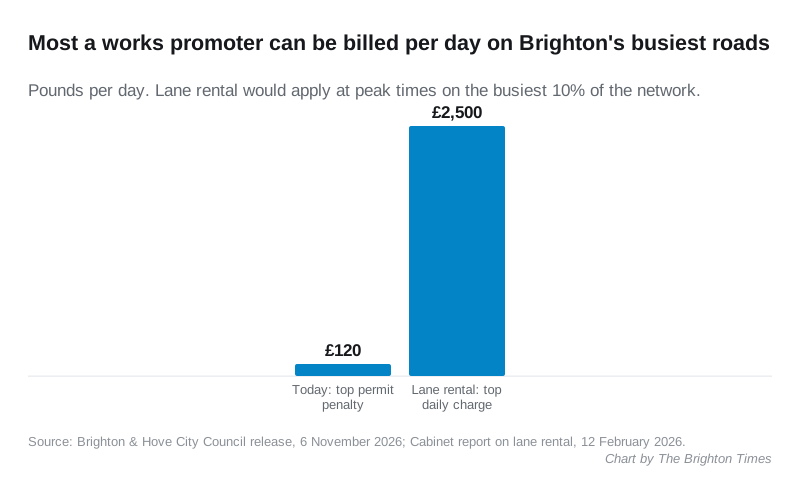
Utility firms digging up Brighton's busiest roads at peak times could pay up to £2,500 a day from spring 2027, against a £120 top penalty today.
Utility companies that dig up Brighton & Hove’s busiest roads at the busiest times could have to pay up to £2,500 a day from spring 2027. The most they face for breaching a permit today is £120 a day.
The charge is called lane rental. Brighton & Hove City Council says it plans to send its scheme to the Transport Secretary this month for approval. Cabinet gets an update on Thursday 12 November.
The council said on 6 November that emergency roadworks in the city take around 20 days on average to finish. In areas with lane rental schemes, it says, the average is two to five days.
How lane rental works
Gas, water, electricity and telecoms companies, council teams and contractors all need a permit to work on the road. The council receives around 20,000 permit applications a year.
The permit fee is capped by the Department for Transport and is not linked to how long a hole stays open. The council’s February Cabinet report said that gives firms “no real financial incentive” to work differently.
Lane rental adds a daily charge on top, for every day the works occupy the road. Under the government’s rules it can only cover:
- the busiest 10% of the network, chosen from the council’s list of traffic-sensitive streets
- the busiest times of day on those roads
The rules also require discounts for firms that share a dig and incentives to work outside peak hours. Utility companies get 12 weeks’ notice before it starts, and there is a trial period first.
Where the money goes
The February report estimated the scheme would raise £1.1 million to £1.6 million a year, depending on how far firms change their behaviour. Running it would cost about £360,000 a year.
Half of what is left after costs must go to highway maintenance, about £370,000 to £620,000 a year on the report’s figures. The other half goes into a ringfenced fund for projects that cut the disruption caused by street works.
The council’s existing permit scheme brings in about £800,000 a year but has to break even by law. Lane rental is allowed to make a surplus.
When it could start
Cabinet agreed in February 2026 to apply for the powers. The council has since set up a development group of industry volunteers and held the required formal consultation. The February report said that would include utility companies, public transport operators and disability groups.
The 12 November Cabinet report says the council is “on track” to submit the scheme to the Transport Secretary in November. If approved, it could start in spring 2027. The February report put the expected start at April 2027 and warned that resourcing problems at the Department for Transport could slow approval.
Lane rental already runs in Kent and London. The council says those schemes have significantly cut the time roads stay affected by works.
Councillor Trevor Muten, Cabinet member for transport, said: “Roadworks are one of the biggest causes of frustration for residents and can have a significant impact on local businesses and journeys across the city.”
What it means for you
- Nothing changes yet. The scheme needs the Transport Secretary’s approval, and the council has not published which roads will be in it.
- Fewer long-running digs on main roads is the aim. The council’s figures suggest emergency works on lane rental roads could finish in days rather than weeks.
- Overrunning works already cost more. Since 5 January 2026, firms can be billed when works overrun into weekends and bank holidays, and fixed penalties for overruns and permit breaches have doubled, the February report says.
The same Cabinet meeting decides on camera enforcement at five banned turns. This week’s closures, including Western Road, are on our roadworks and travel page.
Have your say