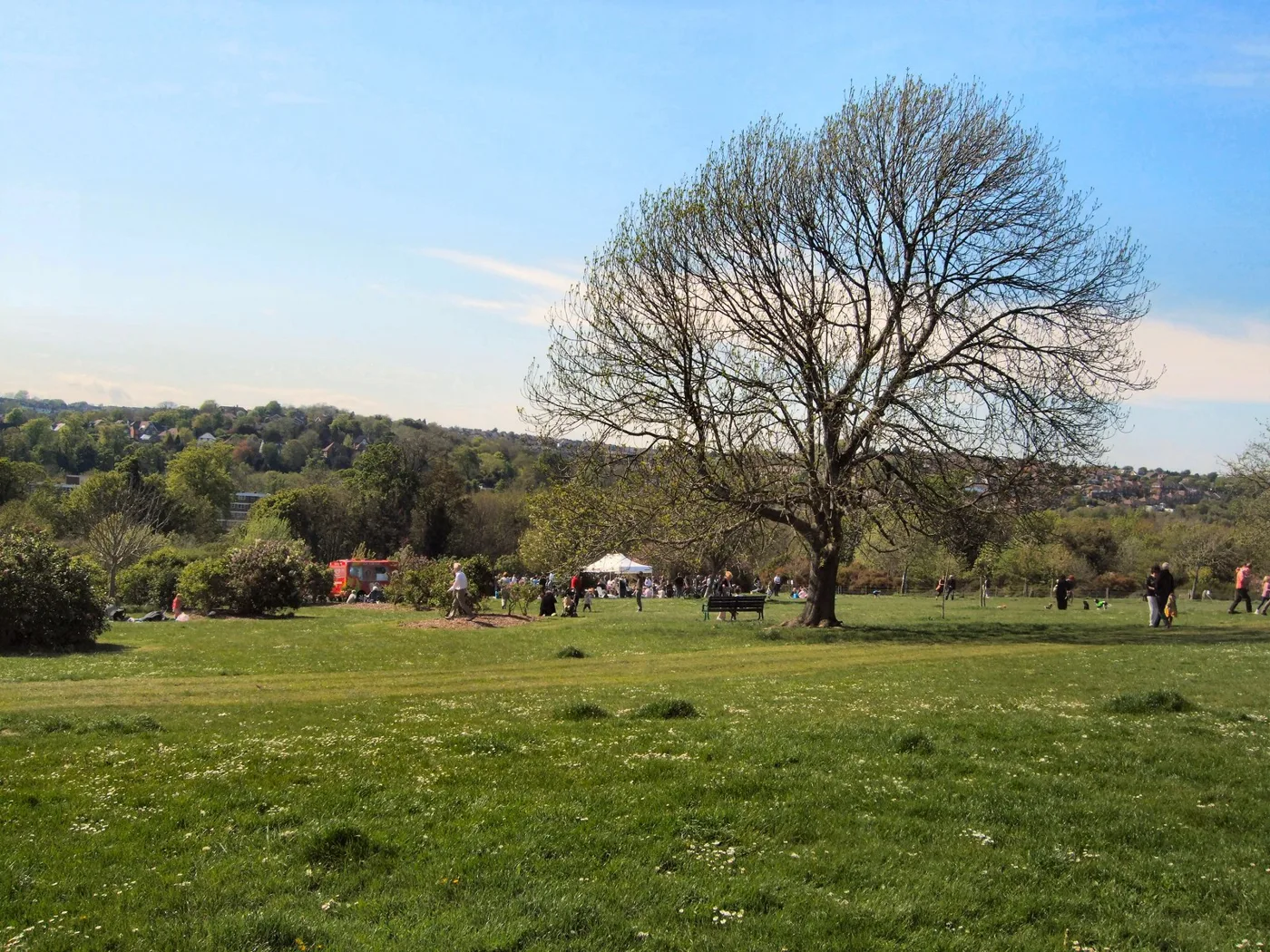

About 200 elms in Withdean Park come down from Monday 19 October after an elm disease outbreak. The work takes around three weeks in one phase.
Around 200 elm trees in Withdean Park will be cut down from Monday 19 October after inspections found a significant spread of elm disease. Brighton & Hove City Council announced the work on Wednesday 14 October. One mature ash tree is coming down as well.
It follows the felling of infected elms on the edge of Coldean Woods in September, and the council’s own elm disease page now says the city is facing “a higher than usual outbreak of the disease” this year.
What is happening
The council’s arboriculture team will do the work. According to its release:
- About 200 elms and one mature ash will be felled.
- Work starts on Monday 19 October and should take around three weeks.
- It will be done in one phase, which the council says is to limit disruption to the woodland, wildlife and park users and to let the site recover quickly.
- All the affected trees are in one small area of the park. The council says its “prominent location” means the work will still have an impact on the wider park. It does not say which part of the park that is.
- A large proportion of the existing vegetation will stay.
The council has notified the Forestry Commission. Elm felling for disease control is exempt from the usual felling licence under the Forestry Act, and the council says all the necessary ecological assessments will be done before plans are finalised.
Why healthy-looking trees are coming down too
Some of the 200 trees may look healthy. Under the council’s established policy, a felling takes out three groups:
- trees that are infected
- trees that are deteriorating
- neighbouring elms likely to be infected through their interconnected roots
Elm disease travels three ways, the council explains: elm bark beetles carry the fungus from tree to tree, it passes underground through joined root systems, and new growth from infected fragments can carry it on after a tree is removed. That is why the area will be managed after the felling to stop regrowth from any infected roots.
Councillor Alan Robins, Cabinet member for Sports, Recreation and Libraries, said: “It’s always sad when trees have to be felled, but the work planned for Withdean Park is essential to manage the ongoing problem of elm disease and to protect other healthy trees.”
He added: “Once the work is completed, we will continue to monitor the site to help prevent further spread of these devastating diseases.”
Why it matters in Brighton
Brighton and Hove hold the National Elm Collection, which survived the Dutch elm disease epidemic that killed most of Britain’s elms. The council says that if this year’s outbreak is not brought under control, the city could lose “nearly a third of its trees”. In the spring it began inoculating many of the city’s elms to protect the collection.
Withdean Park itself is best known for something else. The council’s park page describes “one of the largest collections of lilacs in the world”, the inspiration for the park’s Lilac Lark fair, alongside a lily pond garden and woodland walks to the north and east. The council’s release does not say whether the felling area is near the lilacs.
What it means for you
- Visiting the park: the work runs for around three weeks from 19 October. The council has not published which paths or areas will be closed, so follow any signs and taped-off areas on site. The park is at 36 Peacock Lane, BN1 8NA, with on-street parking on Peacock Lane.
- Got an elm in your garden? The council says private elms are a major source of spread because nobody else sees them. If you report a suspected case, it will assess the tree and take action free of charge. Signs are wilting, browning or yellowing patches of leaves between June and September. Email the Elm Disease Team with a photo and the location.
- Want to help the park recover? The Friends of Withdean Park run volunteer work days.
Have your say