

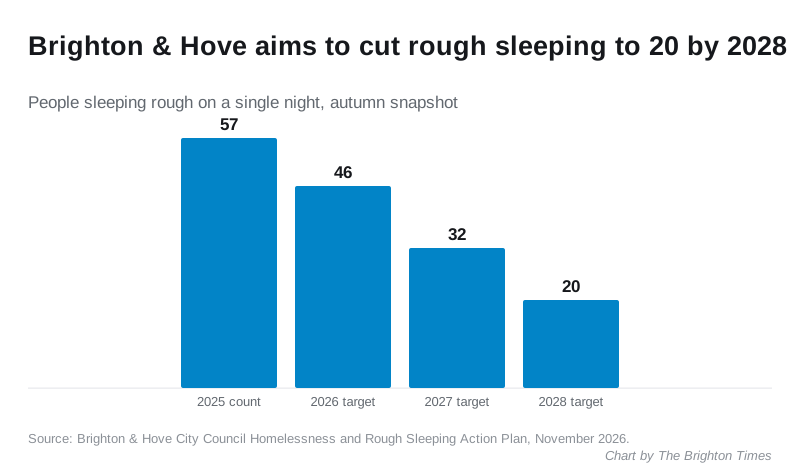
A new action plan aims to cut Brighton & Hove's rough sleeping count from 57 to 20 by autumn 2028. Family temporary housing would fall far more slowly.
Brighton & Hove City Council wants to cut the number of people sleeping rough on a single night from 57 to 20 by autumn 2028. The target is in a new action plan going to Cabinet on Thursday 12 November.
The government requires councils to publish a plan by 1 December 2026 as a condition of grant funding. The Cabinet report asks members to adopt it alongside a policy on temporary housing and a plan for long-term rough sleepers.
The targets
The action plan sets these yearly checkpoints:
| Measure | 2025 | 2026 | 2027 | 2028 |
|---|---|---|---|---|
| People sleeping rough on a single night, autumn count | 57 | 46 | 32 | 20 |
| Long-term rough sleepers, November | 24 | 23 | 18 | 8 |
| Households with children in temporary housing, per 1,000 households, September | 6.86 | 6.86 | 6.50 | 6.00 |
| Households with children in B&B over six weeks, September | 2 | 0 | 0 | 0 |
| Homelessness prevented or relieved, July to September | 37% | 39% | 41% | 47% |
Where the city starts from
The plan sets out the starting point:
- Rough sleeping rate: 30.0 per 100,000 people in March 2025, joint 19th highest in England. The South East rate was 11.5 and England’s was 13.4.
- Recent fall: the annual count dropped from 76 in November 2024 to 57 in autumn 2025, which the plan calls the third largest fall in the country.
- Homelessness review: 3,580 people were homeless in the city in June 2024, including 1,411 children.
- Rents: the average private rent takes 45% of income, against an affordability threshold of 30%.
The target for families moves much more slowly. The plan says the rate of households with children in temporary housing will hold at 6.86 this year. It blames the private rental market, including competition from students for family-sized homes.
What the council says is already changing
The report points to early signs of progress:
- 44.9% of households sought help at the prevention stage in the first quarter of 2026/27, up from 38.7% in 2025/26
- successful prevention outcomes are forecast to rise from 554 households in 2025/26 to 662 this year
- the share of temporary housing that is nightly paid fell from 26% in January to 16% in August
These sit beside the much larger total. There were 2,358 households in temporary housing in October, and Cabinet will vote the same day on buying or leasing up to 500 homes.
What it means for you
The new temporary housing policy would replace the current allocation policy. It sets out how the council judges whether a placement is suitable, including medical needs, support needs, affordability, accessibility and location. It also sets out how placements are reviewed when a household’s circumstances change.
The government’s new Rough Sleeping Programme aims to give everyone sleeping rough a meaningful offer of accommodation or support by Christmas. A separate report on the city’s response is due at Cabinet in December. Progress against the targets will come back to Cabinet once a year.
If you are at risk of losing your home, the council’s homelessness pages explain how to get help.
Have your say