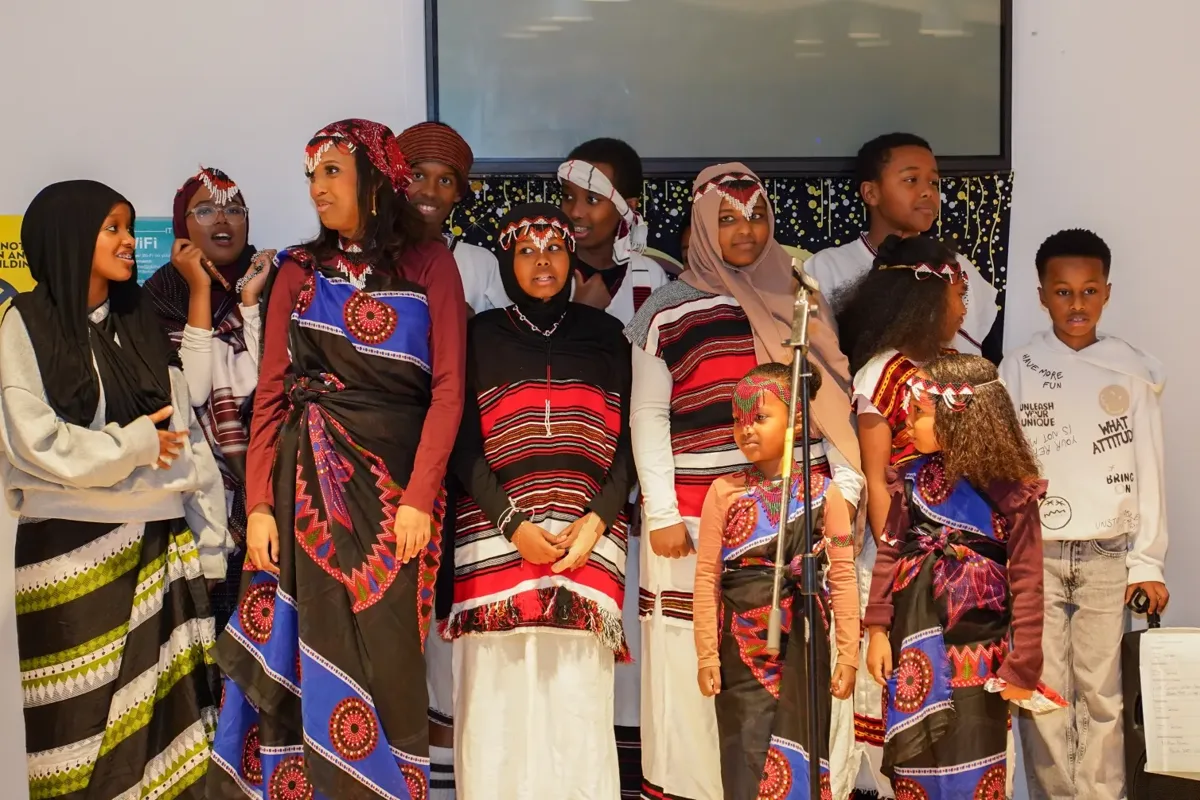

Refugee families who came to Brighton & Hove in 2006 have marked 20 years in the city with music, food and dancing. One recalls arriving aged four.
Brighton & Hove’s Oromo community has marked 20 years in the city. Friends and families gathered at the East Brighton site of the MET College on Saturday 24 October for speeches, music, traditional hot food and dancing.
The city had no Oromo community before autumn 2006. That year the council welcomed 79 refugees under the government’s Gateway Protection Programme, according to its account of the anniversary. The council was one of the programme’s early adopters.
Most of the families were from the Oromo ethnic group, which was being persecuted by the Ethiopian government at the time. The adults had fled Ethiopia. Many of the children had been born as refugees, some of them in a large refugee camp in Kenya.
A classroom at Hove Park School
The city had no existing Oromo community to turn to, and the council says the learning curve was steep for its services. Interpreters were found in London.
A temporary school was set up in a spare classroom at Hove Park School, for children of all ages on the programme. Children and parents learned how UK schools worked, and the children’s English was assessed before they moved into mainstream schools.
Finding work was harder for the adults. Many could not carry on in their old professions, and some had had no formal education. Some of them now work as cleaners, carers and security guards for the council, in schools and for its contractors.
“I could not see myself living anywhere else”
Fardossa was four when she arrived. She told the council: “Coming to Brighton & Hove has given us a really great opportunity and we are so grateful to be here.”
She remembers the support when she started school, which she says “made it less daunting”.
“Brighton & Hove is a great city, and I really could not see myself living anywhere else,” she said. “It can be lonely at times, because most of my family members are still in Ethiopia.”
The community still meets every Saturday, she said, “to check in how everyone is doing, to get together and share the culture”.
Over the years it has kept up its language, food and culture, helped by council grants. It has specialised in musical events that draw Oromo people from across the UK and abroad. There is also a women’s group that meets weekly, and children and grandchildren of the first arrivals have been born in the city.
What it means for you
The Gateway programme no longer exists, but the council has gone on resettling refugees, mainly from Syria and Afghanistan. It says it uses lessons learned from 2006.
Councillor Mitchie Alexander, the Cabinet member for communities, equalities, public health and adult social care, said: “I want to thank each and every one of the members of the Oromo community for helping us to learn how to be more welcoming.”
Have your say